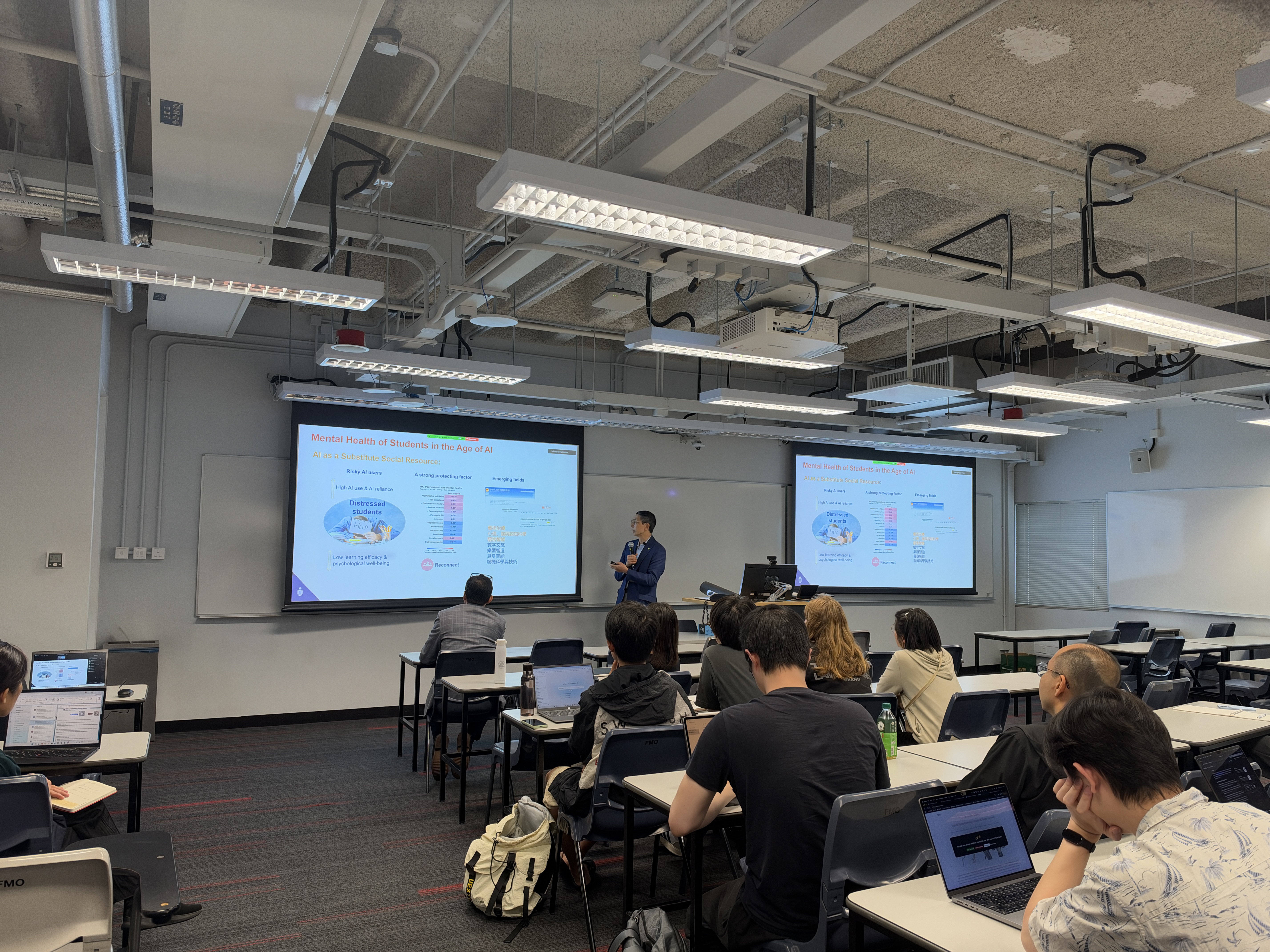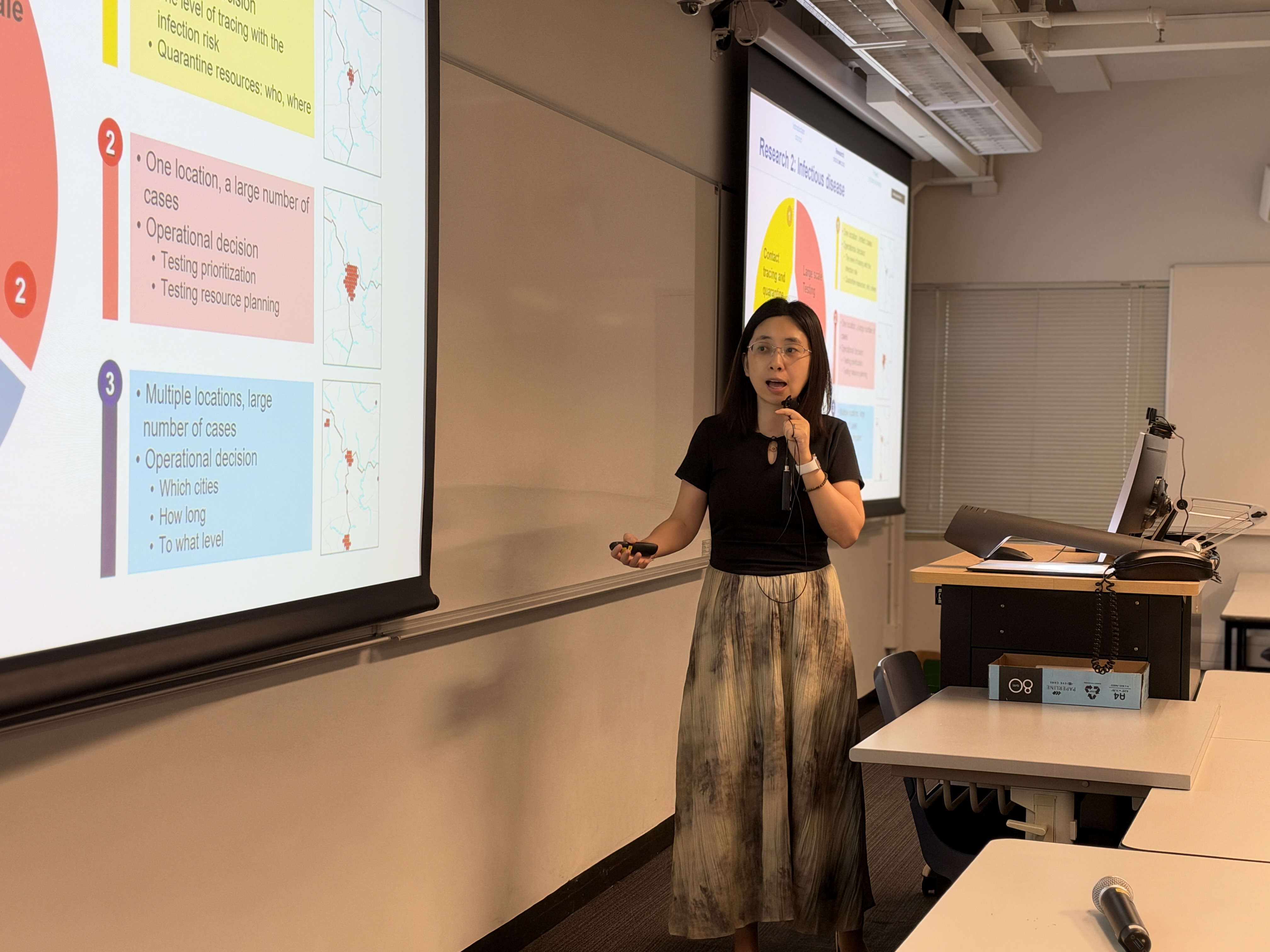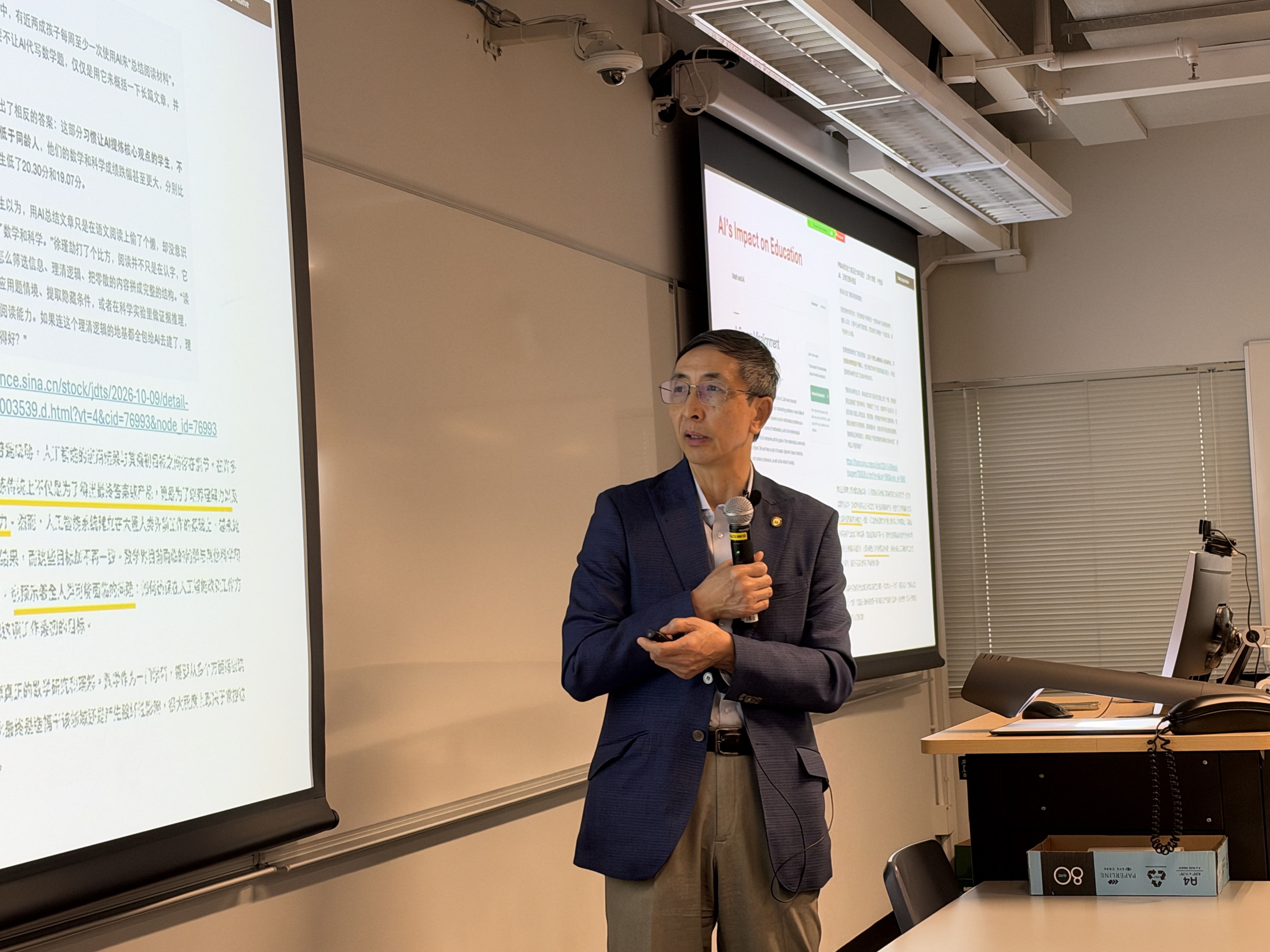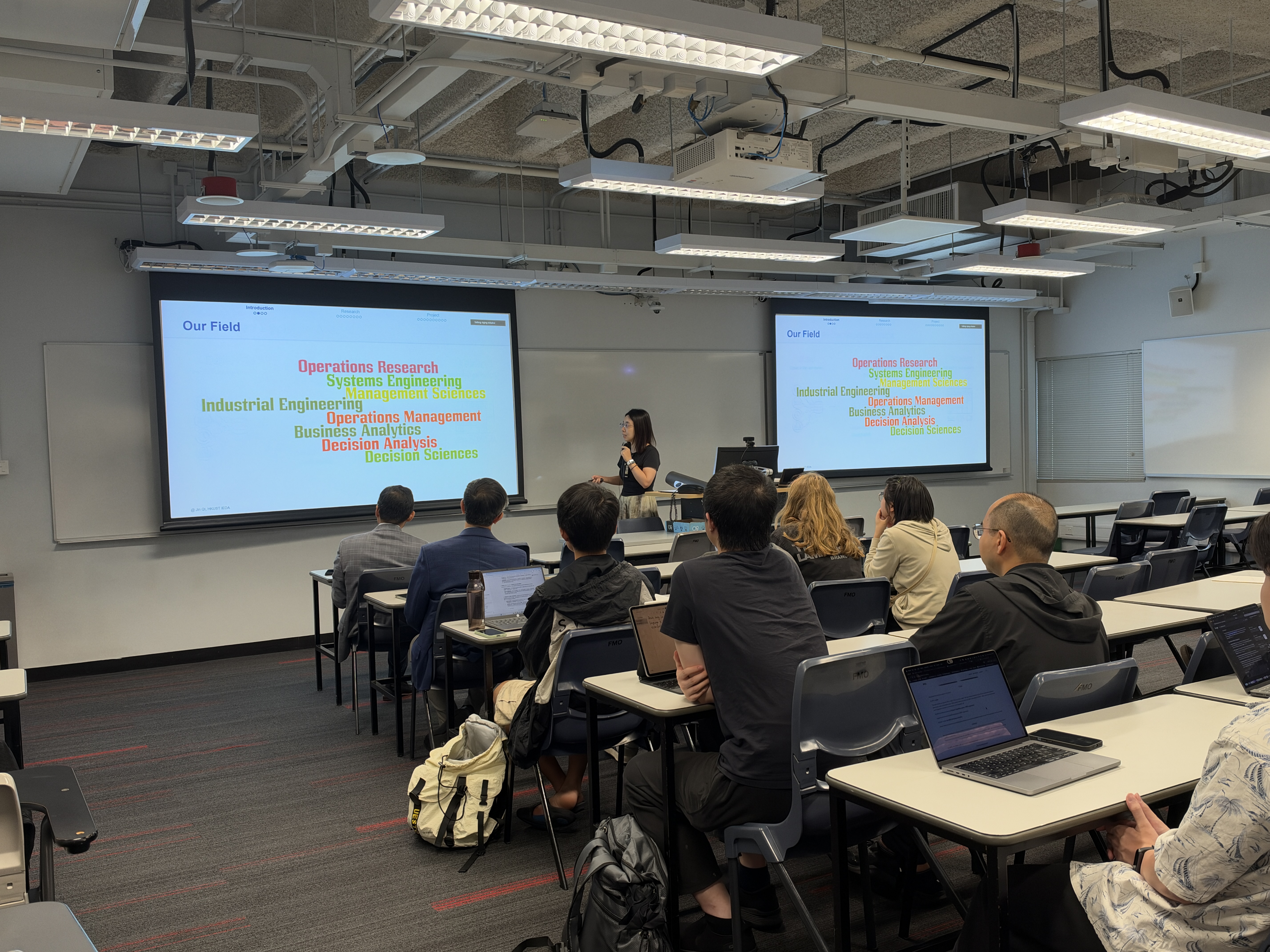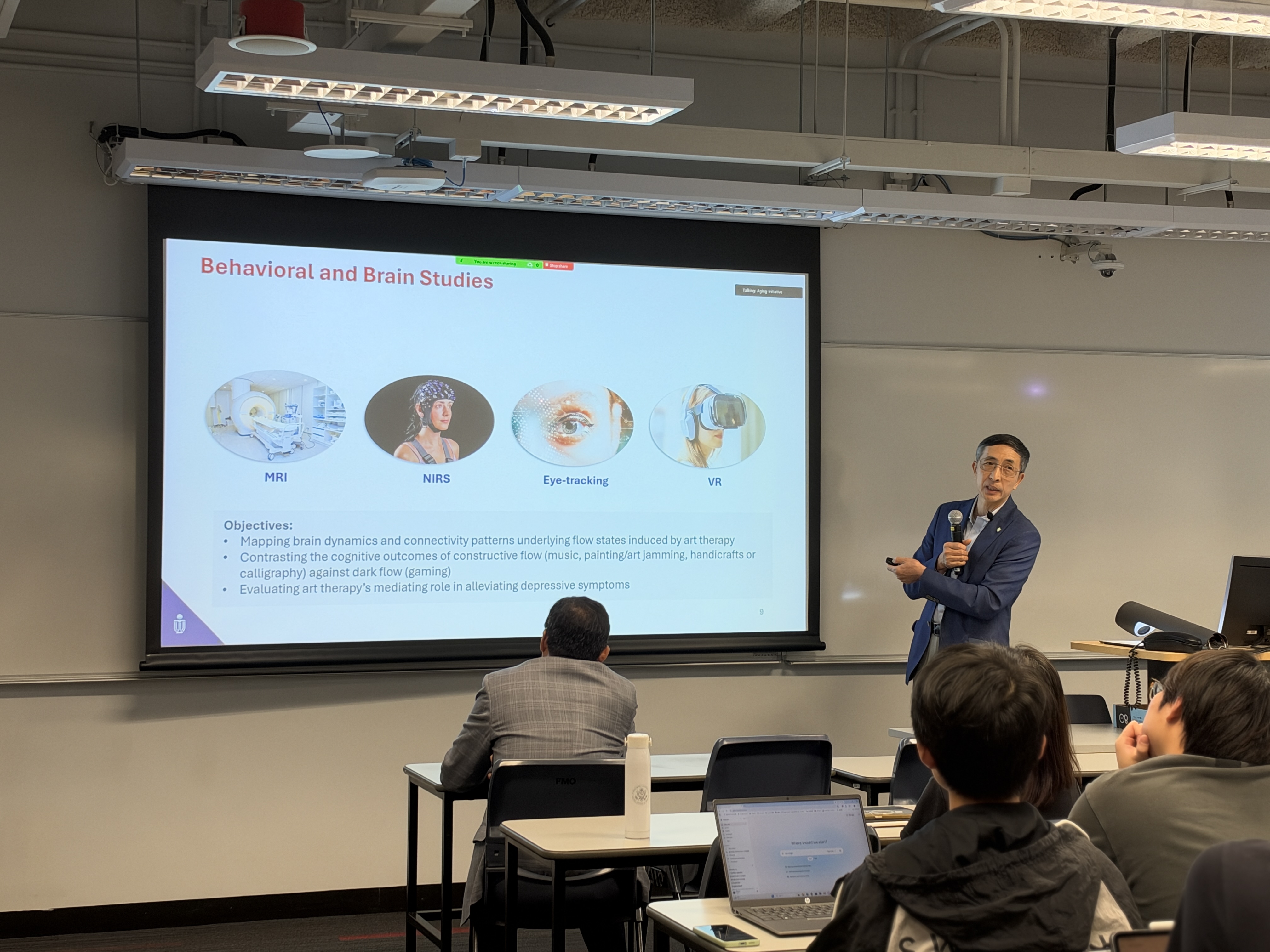
The HKUST Center for Aging Science successfully hosted another session of its Research Back-to-Back Seminar Series on 28 October 2026, bringing together faculty members, researchers, students, and practitioners to explore how advances in artificial intelligence, neuroscience, and decision analytics are reshaping health, education, and healthcare services. The seminar featured presentations by Prof. Andrew LI, Dean of Humanities and Social Science; Yan Ai Foundation Professor of Social Science, and Prof. Jin QI, Associate Director of the Center for Aging Science; Associate Professor of Industrial Engineering and Decision Analytics.
Opening the seminar, Prof. Bert Shi, Director of the Center for Aging Science, highlighted the series' mission to foster cross-disciplinary exchange by showcasing aging-related research from different academic perspectives.
Understanding Human Learning and Mental Health in the AI Era
In the first talk, Prof. Andrew LI shared insights from his research at the intersection of neuroscience, education, mental health, and artificial intelligence. He emphasized that while AI is rapidly transforming education and healthcare, it also presents important challenges regarding critical thinking, social interaction, and human development.
Drawing on recent studies involving university students, Prof. Li discussed concerns over the growing reliance on AI as a substitute for social interaction and problem-solving. He highlighted findings suggesting increased levels of anxiety, depression, and loneliness among students, underscoring the need to better understand how AI may influence learning behaviors and mental wellbeing.
Prof. Li also showed how advanced neuroimaging and behavioral research methods, including Near-Infrared Spectroscopy (NIRS), MRI, eye-tracking, and virtual reality, can be used to investigate learning, social interaction, and brain function. He shared examples of research examining how music, language learning, and social engagement shape brain activity, and discussed the potential of neuroscience-informed approaches to support education and healthy aging.
A recurring theme throughout his presentation was the importance of preserving human interaction and critical thinking in an increasingly AI-enabled world. While acknowledging AI's potential as an educational tool, Prof. LI stressed that meaningful learning requires active reasoning, social engagement, and embodied experiences that remain difficult for current AI systems to replicate.
Improving Healthcare Services Through Data-Driven Decision Analytics
The second presentation by Prof. Jin QI focused on how mathematical modelling, data analytics, and optimization techniques can support more efficient and sustainable healthcare systems.
Introducing the concept of data-driven decision analytics, Prof. Qi demonstrated how complex healthcare operations can be transformed into analytical models to support resource allocation and operational decision-making. She illustrated how these approaches can be applied across hospitals, long-term care facilities, infectious disease management, and personalized healthcare services.
Prof. Qi presented several research projects, including operating theatre scheduling and pandemic testing strategies. One study showed how risk-aware scheduling models can improve operating room utilization while reducing delays and overtime. Another project developed optimal group-testing strategies during infectious disease outbreaks, demonstrating substantial reductions in testing resources while maintaining effectiveness.
She also shared ongoing collaborations with healthcare partners, including projects aimed at improving surgery duration prediction, emergency department staff rostering, and workforce planning for community elderly care services. By integrating machine learning, optimization models, and AI-assisted decision support tools, these initiatives seek to enhance operational efficiency and improve service delivery across healthcare settings.
Inspiring Dialogue Across Disciplines
The seminar concluded with a lively discussion on the evolving role of AI in education, healthcare, and decision-making. Participants exchanged views on the respective strengths of human expertise and AI systems, as well as opportunities for future interdisciplinary collaborations.
As part of the Center's continuing efforts to foster collaboration across disciplines, the Research Back-to-Back Seminar Series provides a valuable platform for highlighting innovative research that addresses the opportunities and challenges of an aging society. Through conversations spanning neuroscience, social science, engineering, and healthcare, the series continues to advance the Center's mission of promoting healthy and resilient aging through research and innovation.