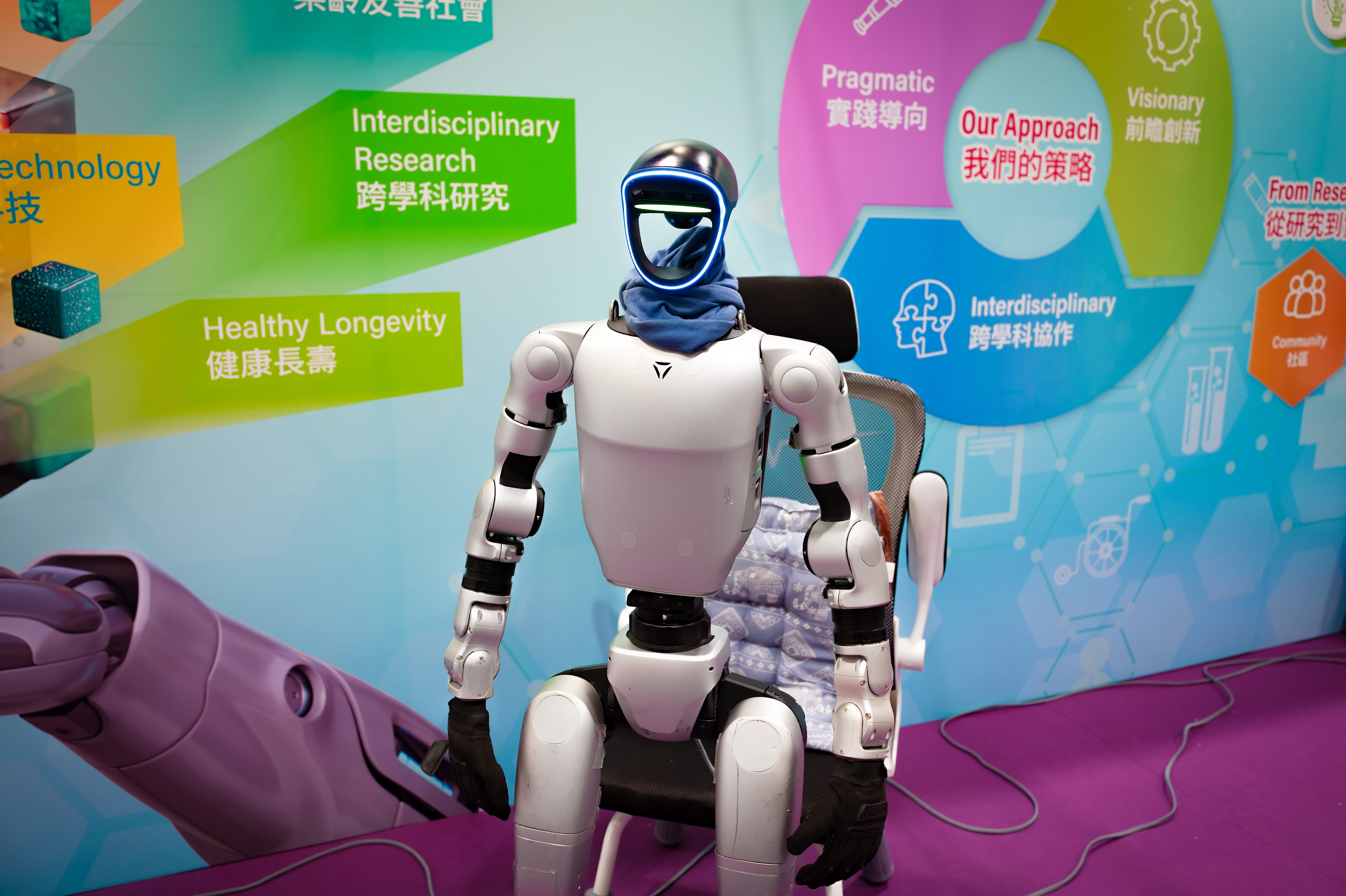
The Center for Aging Science of the Hong Kong University of Science and Technology (HKUST) showcases three innovative research projects at the BOC Life 11th Golden Age Expo & Summit (GAES) 2026, demonstrating how artificial intelligence, digital health technologies, and robotics can support healthier aging, independent living, and preventive healthcare.
Featured at the exhibition are the Humanoid-Assisted Exercise for the Elderly, the Home Monitoring and 3D Reconstruction for the Elderly, and The Express Heart Check Program, a rapid community-based cardiovascular screening initiative. Together, the exhibits highlight the Center’s interdisciplinary efforts to address the opportunities and challenges of an aging population through practical and impactful technological innovations.
Humanoid-Assisted Exercise for the Elderly Addresses Manpower Challenges in Elderly Care
Regular physical activity plays a vital role in maintaining mobility, balance, strength, and overall well-being among older adults. However, many elderly care homes, day care centers, and community centers face staffing constraints that limit the frequency of organized exercise sessions.
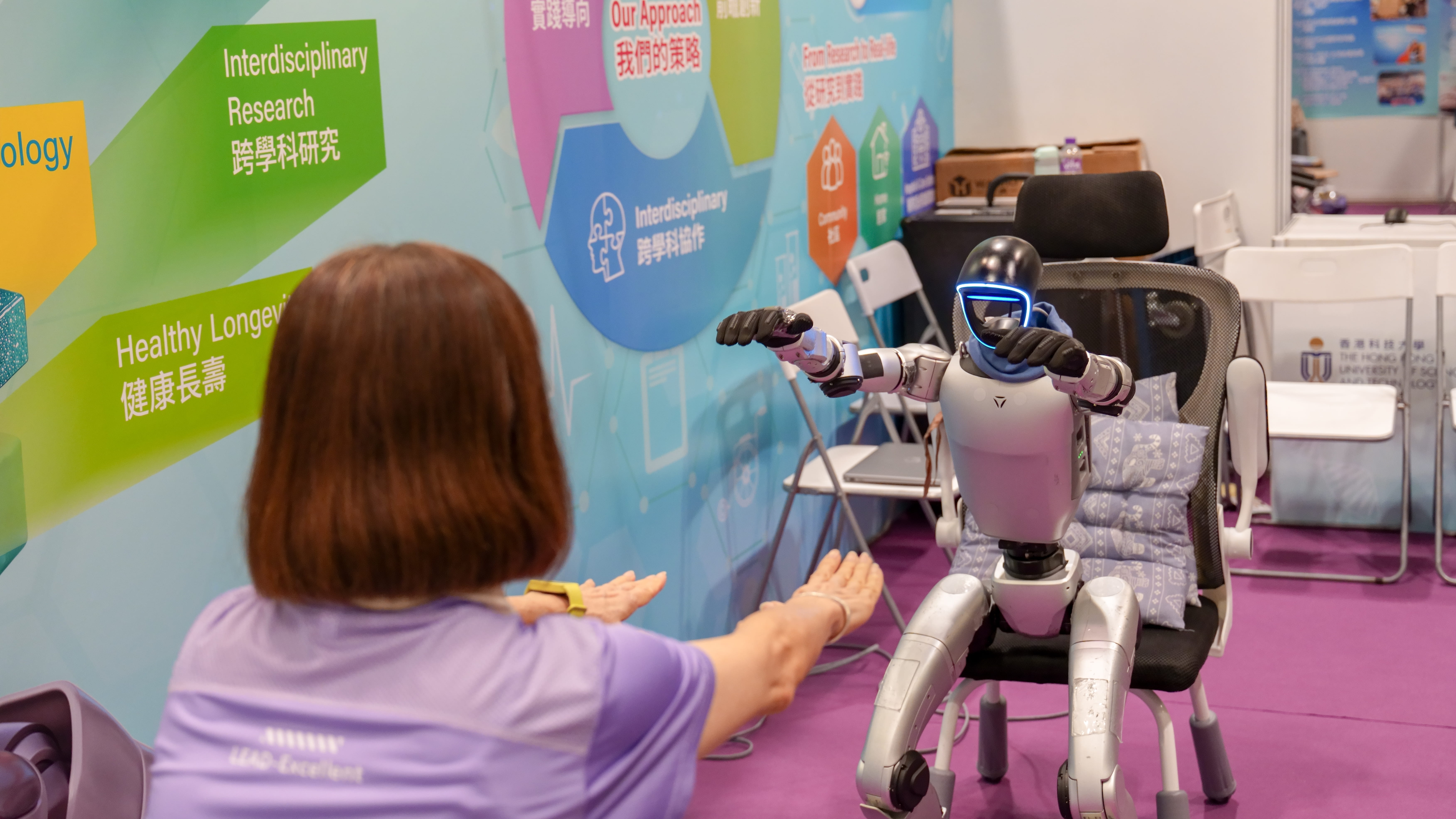
To help address this challenge, the HKUST Center for Aging Science demonstrates its Humanoid-Assisted Exercise for the Elderly, which combines humanoid robotics with AI-powered exercise assessment technology.
The humanoid robot acts as an exercise leader, demonstrating movements and encouraging older adults to participate in guided exercise sessions. By providing consistent exercise demonstrations, the robot enables care providers to increase exercise opportunities for older adults while reducing reliance on staff availability.
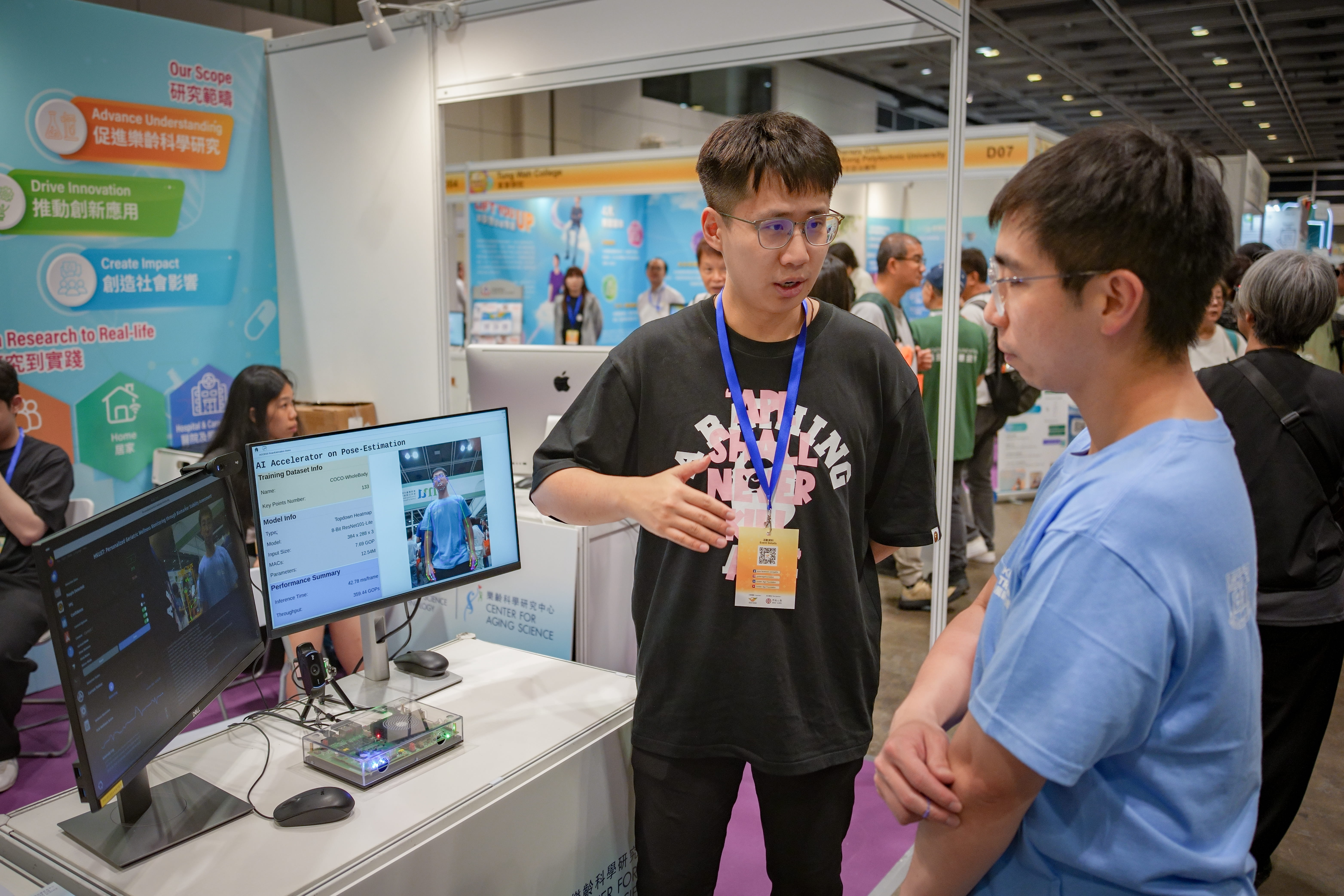
Complementing the robot is an AI-based pose assessment system that uses computer vision technology to monitor participants’ movements in real time. The system evaluates exercise performance, assesses posture and movement quality, and provides feedback to support correct exercise execution.
One of the project’s key technological achievements is enabling humanoid robots to perform chair-based exercises. Because many older adults participate in seated exercise programs due to mobility limitations or balance concerns, the robot must safely interact with physical objects such as chairs while maintaining stability and accurately demonstrating exercise movements. This requires sophisticated integration of object interaction, motion planning, balance control, and movement coordination.
The combined robotic coaching and AI assessment platform offers a new model for promoting active aging while helping care providers expand exercise services despite manpower limitations.
Home Monitoring and 3D Reconstruction for the Elderly Supports Early Detection and Aging in Place
As more older adults express a desire to remain in their own homes and communities for as long as possible, technologies that support safe and independent living are becoming increasingly important.
The Home Monitoring and 3D Reconstruction for the Elderly showcased by the Center uses advanced sensing technologies, artificial intelligence, and spatial reconstruction techniques to create digital representations of home environments.
The platform is designed to better understand living environments and daily activity patterns, enabling the identification of potential safety risks and early signs of functional decline. Through continuous monitoring and intelligent analysis, the system can support early detection of changes that may affect an older person’s ability to live independently.
By generating three-dimensional models of home environments, this technology also helps identify environmental barriers and hazards that may contribute to falls or other adverse events. The platform supports a proactive approach to aging in place by providing insights that may inform preventive interventions and personalized support strategies.
The project reflects the Center’s commitment to leveraging smart technologies to enhance safety, independence, and quality of life for older adults living in the community.
The Express Heart Check Program Promotes Preventive Cardiovascular Health
Cardiovascular disease remains one of the leading health concerns among older adults, making early screening and risk awareness essential components of healthy aging.
At the GAES 2026, the HKUST Center for Aging Science also presents The Express Heart Check Program, a community-based initiative designed to make cardiovascular health screening more accessible and convenient.
The program provides rapid, non-invasive cardiovascular assessments that allow participants to gain immediate insights into the health status of their heart. By bringing screening services directly into community settings, the initiative encourages greater health awareness and supports early identification of potential cardiovascular risks.
The Express Heart Check Program forms part of the Center’s broader effort to promote preventive healthcare and empower individuals to take a more active role in managing their health. Through accessible screening and health education, the program aims to encourage timely medical follow-up and healthier lifestyle choices.
Advancing Science and Innovation for Healthy Longevity
The three exhibits featured by the HKUST Center for Aging Science at the GAES 2026 demonstrate a comprehensive approach to healthy aging, encompassing active aging, independent living, and preventive healthcare.
From robot-assisted exercise and AI-driven movement assessment to intelligent home monitoring and rapid cardiovascular screening, the showcased projects illustrate how scientific research and technological innovation can be translated into practical solutions with real-world impact.
As the GAES 2026 brings together researchers, healthcare professionals, industry leaders, and community stakeholders from around the world, the HKUST Center for Aging Science continues to advance its mission of developing evidence-based innovations that support healthy longevity and improve the lives of older adults.